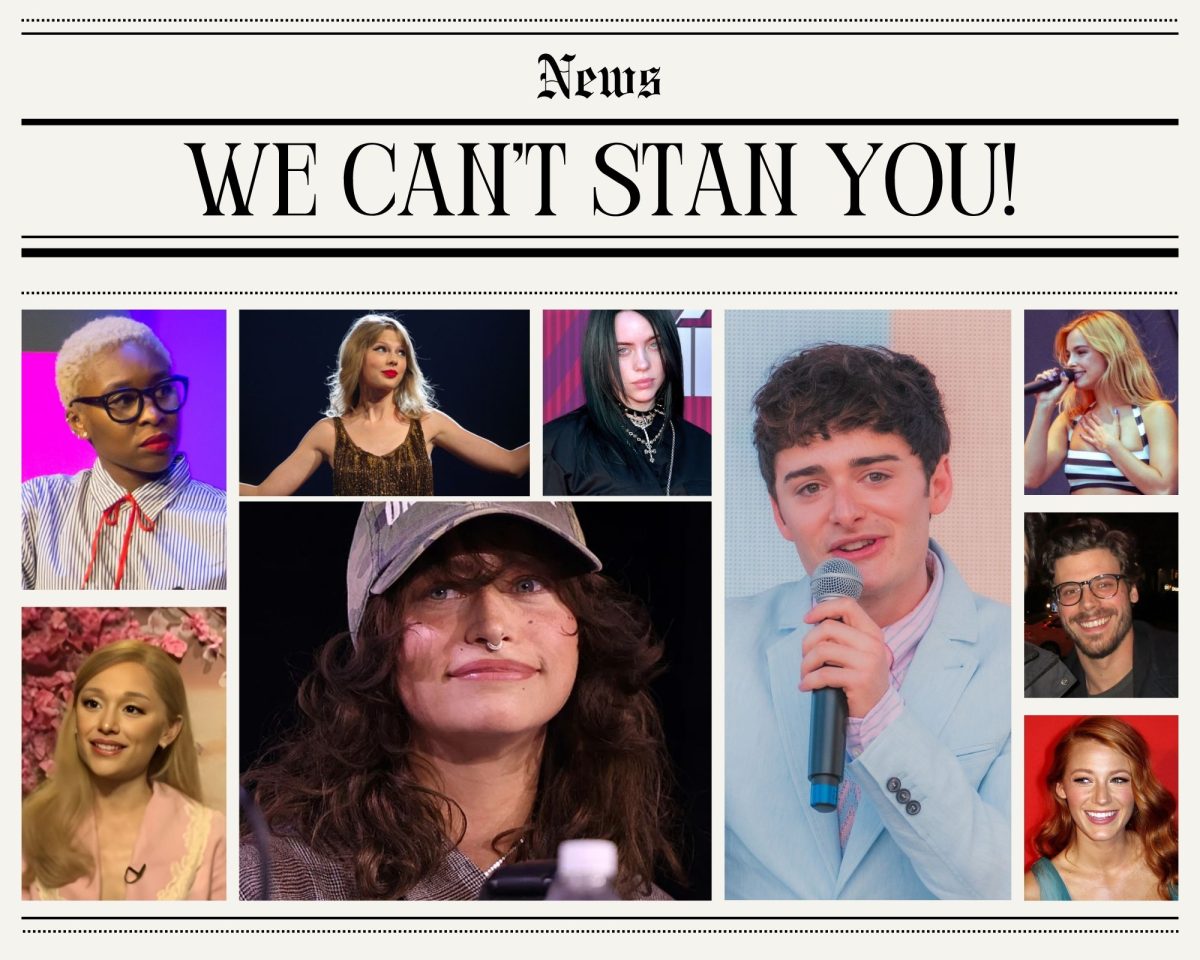
Do we place too much emphasis on celebrities’ moral stances, especially if we once idolized them? If so, we might be weaponizing those stances to make ourselves, or by proxy, another celebrity look better. This often happens within stan culture, the online phenomenon where fans show extreme devotion to celebrities, defending or criticizing others based on their loyalty.
Recently, a new phenomenon has started to plague many social media platforms where a once-beloved celebrity becomes the target of vitriolic hate after revealing a personal opinion or taking a controversial political stance. Justified or not, this hate can get lost in translation and begin to feel like virtue signaling.
Instead of reflecting true commitment to a cause, people only mention it to appear virtuous or gain approval from others, or to boost another celebrity they like because that celebrity holds more widely accepted beliefs.
The fifth and final season of “Stranger Things” has finished airing on Netflix, and while the season was met with praise by the general audience, it was also met with scrutiny by fans on social media. Many people criticized the season’s acting, writing, and overall feel, claiming that it was the worst season of the show, almost rivaling that of the hatred toward the ending of “Game of Thrones.”
But no one faced the same amount of hate as Noah Schnapp during the show’s episode release schedules. He was mocked by watchers and many viewers who are fans of his character, Will Byers, found themselves increasingly harassed and labeled as Zionists. But the same people attacking Schnapp and his fans also simultaneously support shows that feature individuals with the same views as Noah Schnapp.
Schnapp’s decline in popularity began following the Oct. 7, 2025, attack in Israel. Schnapp posted a statement on Instagram saying anyone that was pro-Hamas should be ashamed. He was heavily criticized for his stance on the conflict, but this criticism would then grow into personal attacks, including insults about his appearance.
This has led people to question whether public shaming is performative, used to create a “gotcha moment” in online arguments rather than to show genuine concern for social causes they claim to support. Many people have pointed out that these accounts attacking celebrities or other public figures have little too no posts about real-world problems, bringing them up only when they want to take down someone or something they dislike. This, in turn, reduces the social issue to a weapon and ignores the real tragedy behind it.
“It feels performative because rather than trying to bring more awareness to the cause or doing something to actively help it, like donating or protesting, you’re trivializing it by treating it as a weapon to use whenever you want to make yourself look better,” said Nathalie West, a senior. “This is especially seen in debates pertaining to stan culture.”
X user @frustratedbyers who is from Palestine expressed her anger after having the conflict in her country used in a “Stranger Things” shipping debate about Will Byers (Schnapp) and Mike Wheeler (Finn Wolfhard), since she preferred the two characters as a couple. She wrote, “did will byers and mike wheeler travel to tel aviv post epilogue and i wasn’t aware?…don’t tell me how to support my own country” [sic]. It’s this type of behavior that takes away from the seriousness of such sensitive topics as people begin to blur the suffering of others and turn it into a joke used to mock someone.
Odessa A’ Zion, the unknown rising star from “Marty Supreme,” also became the target of online scrutiny after many users began claiming she was purposely trying to look racially ambiguous. This was further exacerbated when she was set to star as the lead in a film adaptation of a book called “Deep Cuts,” where the main character is of Mexican heritage, but the people working on it were willing to rewrite that part of the character. Because of this, all her detractors said that this proved their point.
Following this pile of hate, A’Zion quickly made an Instagram story saying that she would withdraw from the project out of respect for what people wanted. Despite that, many users continued to attack her, saying that she still accepted the role and deserved the backlash she got. On Jan. 29, the day A’Zion announced she was no longer playing the role, X user @glindaupland posted, “So y’all were angry when she took the role and now y’all are angry when she does what you wanted let’s be honest y’all are just looking for reasons to hate her” [sic].
“I think this happens because people base their opinions on social media posts and constantly seek attention,” said Ashley Alegre, a senior. “It feels performative because you don’t understand the issue at hand and you’re minimizing the situation by using it as a weapon for a celebrity you don’t like.”
Blake Lively, Hudson Williams, Ariana Grande, and Cynthia Erivo are also examples of celebrities that have become despised. And once they became the internet’s next subject for “cruelty of the month,” often for disputable reasons, they found themselves endlessly mocked and insulted.
As these hate campaigns spread, the original issues become blurred, and the attacks become personal. This phenomenon has turned into a constant cycle that keeps repeating itself. The societal concerns being thrown around have real meanings behind them, but as this cycle continues, they become buzzwords that undermine real-world problems.